Generally these are short scenarios about Masons and Masonry that can be read in just a few minutes. Occasionally I also publish some of my longer Masonic articles and even some personal accounts as well.
Tuesday, August 14, 2012
The Goose And Gridiron
The ancient society of the Swan and Lyre, dating back to 1500, described itself as a "Worshipful company of Musicians," and was an effort to organize London minstrels into a guild. It used as its symbol a swan standing on a crest beneath a lyre and ultimately met at a local tavern. In the 18th century the tavern owners, in a not-so-veiled attempt to mock the pretentious name of the society, designed a crest with a goose standing in front of a griddle, and named the tavern the Goose and Gridiron. There, on June 24, 1717, four Lodges met to form what has become modern Freemasonry.
Monday, August 13, 2012
Statue Of Liberty Cornerstone
Officers from the Grand Lodge of New York laid the cornerstone for the Statue of Liberty on August 5, 1884. On August 5, 1984, officers of the Grand Lodge of New York dedicated a plaque on the same spot, commemorating the 100th anniversary of the event.
Friday, August 10, 2012
Catch A Man Before You Hang Him
It's common knowledge the "shot heard 'round the world" started the American Revolution. Lesser known is the fact that Commodore Abraham Whipple fired the first shot of the revolution on the water when he captured the British sloop Rose. Earlier, in 1772, Whipple also led the first uprising against a British ship when he captured and burned the British schooner Gaspee. Whipple and most of his raiding party that overtook the Gaspee were members of St. John's Lodge 1 in Providence, Rhode Island. After the Rose incident, the sloop's captain Sir James Wallace sent Whipple an angry message: "You, Abraham Whipple, on the 10th of June, 1772, burned His Majesty's vessel, the Gaspee, and I will hang you at the yard-arm. –James Wallace." To this, Brother Whipple replied, "To Sir James Wallace, Sir: Always catch a man before you hang him. –Abraham Whipple"
Wednesday, August 1, 2012
Poor Man / Rich Man
Coming to the California gold rush late, Brother Alvin Hayward entered a partnership with four other miners and purchased a claim in 1853. The group worked the mine for four years after which his discouraged partners declared it worthless and abandoned Hayward. Completely destitute, Brother Hayward had no choice but to continue working the mine alone. He spent a grueling year continuing to work the mine when, in 1858, he struck a huge vein of gold. With that good fortune, Brother Haywood eventually became the richest man in the state and went on to become High Priest of Sutter Creek Chapter 11. He was so rich he presented the Chapter with a golden altar and solid gold jewels of office.
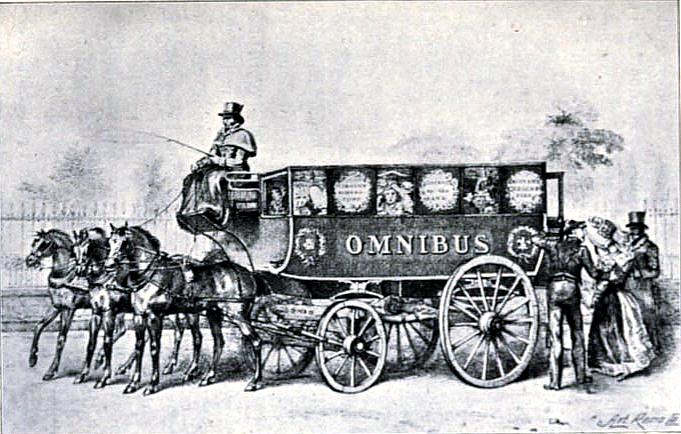
The Funeral Omnibus
George Shillibeer, Globe Lodge 23 of London, had a successful carriage business, specializing in the manufacture of elegant hearses. He invented a way to make carriages longer and larger than ever before and manufactured those, calling his huge vehicle an "omnibus." With that, he established London's omnibus system, a forerunner of the bus system running there today. Given his successes with those two types of vehicles, he also invented a carriage which combined a hearse and a bus. The public's cool reception and short life of Brother Shillibeer's "Funeral Omnibus" confirms that not all ideas are good ones.
Costa Rica
Father Francisco Calvo, a Jesuit Priest, traveled to Peru in 1865. There a group of Catholic priests introduced him to Freemasonry. Father Calvo was so impressed by the Craft, he was initiated, returned home to Costa Rica and founded Freemasonry in that country. Brother Calvo went on to establish Lodge Caridad 26, where he became Master. He was instrumental in founding the Scottish Rite in Costa Rica and became its first Sovereign Grand Commander, serving in that position until his death nearly 25 years later.
The First Lodge
Freemasonry began in the United States on July 30, 1733. On that date, Brother Henry Price and 18 other men met at the Bunch of Grapes Tavern on King Street in Boston and organized the Grand Lodge of Massachusetts, under the authority of Lord Montague, Grand Master of England. At the same meeting they instituted "The First Lodge," which today is St. John's Lodge.